


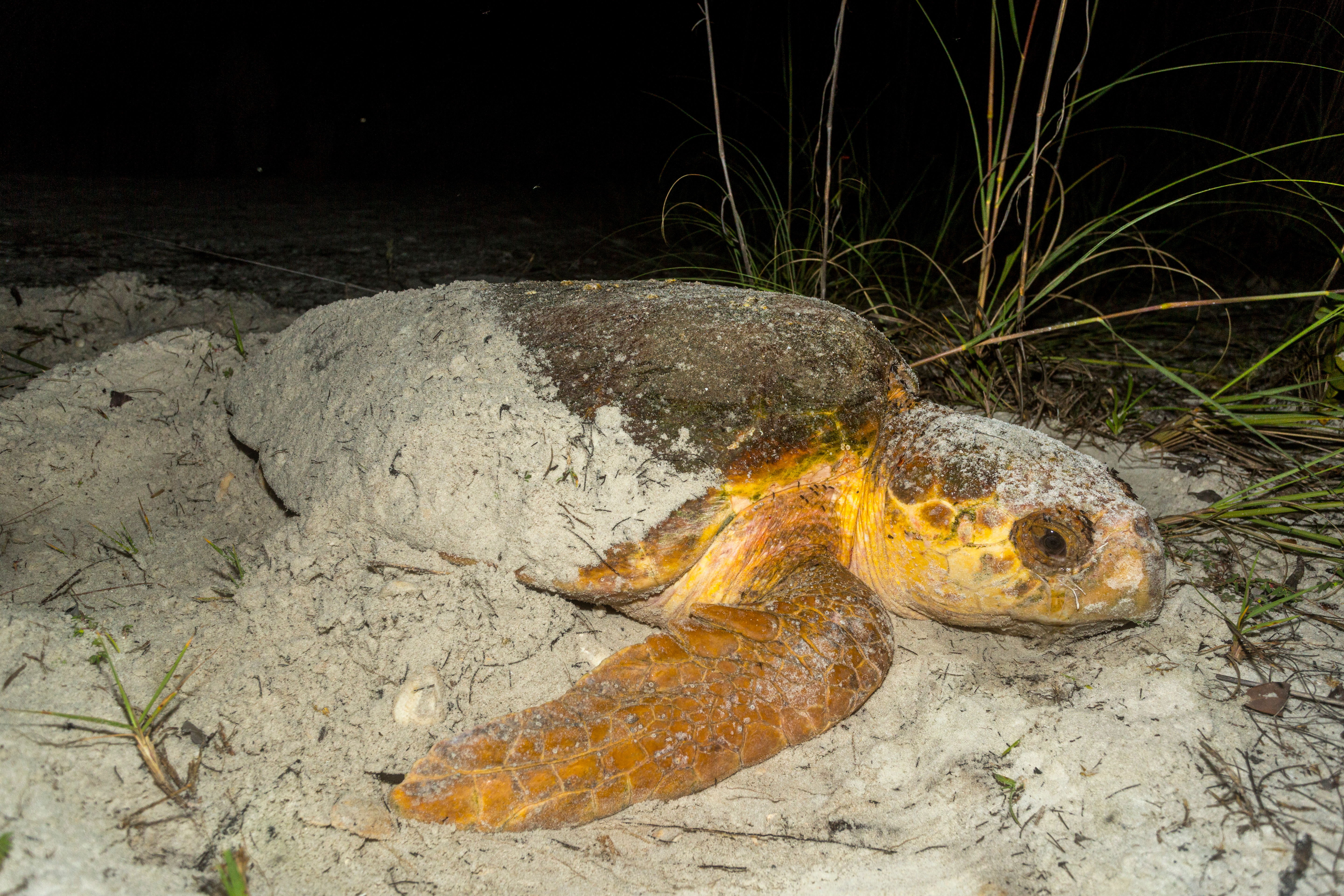
Perdido Key is known for its serene beaches, turquoise waters, and laid-back coastal charm—but after sunset, the shoreline becomes the stage for one of nature’s most remarkable rituals. From May through August, female sea turtles emerge from the Gulf of Mexico to nest on the quiet beaches of Perdido Key, continuing a process that has remained unchanged for millions of years.
Guided by ancient instincts passed down through generations, Loggerhead sea turtles, which are the most common nesting species on Perdido Key, emerge silently from the Gulf under the protective veil of night. After spending most of their lives in the open ocean, these remarkable reptiles return to the very beaches where they were born, some traveling hundreds or even thousands of miles to do so. Weighing between 200 and 300 pounds, they drag their massive bodies across the sand using powerful, paddle-like flippers, pausing frequently as they seek the ideal nesting site.

Their goal: a quiet, dark stretch of sand above the high-tide line, safe from flooding and far enough inland to protect their precious eggs. This journey from surf to sand is physically exhausting and filled with obstacles, but their determination is unwavering—a powerful reminder of the wild wonders that call Perdido Key home.
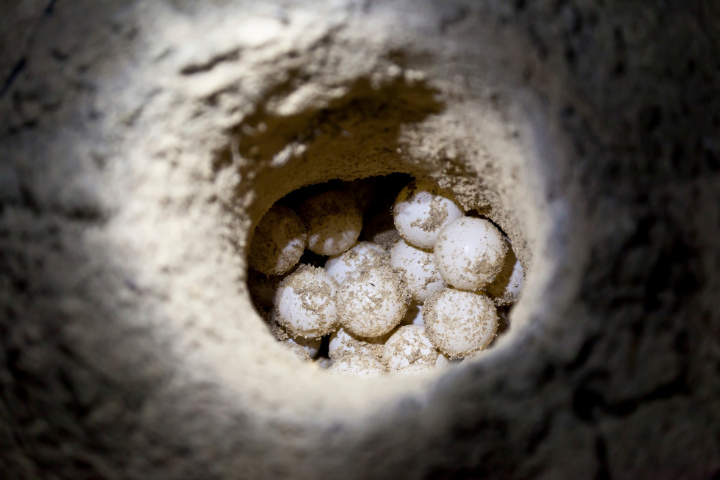
Once a suitable location is found, the turtle begins to dig a body pit and then a deep, flask-shaped nest cavity using her hind flippers—a painstaking process that can take up to an hour. She then deposits 80 to 120 round, leathery eggs, covers them carefully with sand, and slowly makes her way back to the ocean, never to see her nest—or her hatchlings—again.
Each female may return every 2 to 3 weeks throughout the summer to lay multiple nests, often within the same stretch of beach where she herself hatched decades ago.
How Visitors Can Help
Because nesting turtles are extremely sensitive to light, noise, and movement, it’s important to give them space and protect their nesting areas. Perdido Key follows local and federal guidelines to help ensure nesting success, and visitors are encouraged to do their part:
Want to learn more while you’re here? Ask about local turtle walks or public education programs that may be available during your stay.
Lights Out at Night: Beachfront properties should turn off balcony and exterior lights after sunset. Artificial light can confuse turtles, leading them away from the ocean.
-
No Flashlights or Flash Photography: Even brief light exposure can disrupt a turtle’s natural behavior and cause her to abandon the nesting attempt.
-
Keep the Beach Clean and Flat: Remove beach gear each evening and fill in any holes that could trap a turtle or hatchling.
-
Never Approach or Touch a Nesting Turtle: Observing from a distance is essential to avoid causing stress or harm.
Conservation in Action:
Gulf Coast Turtle Watch
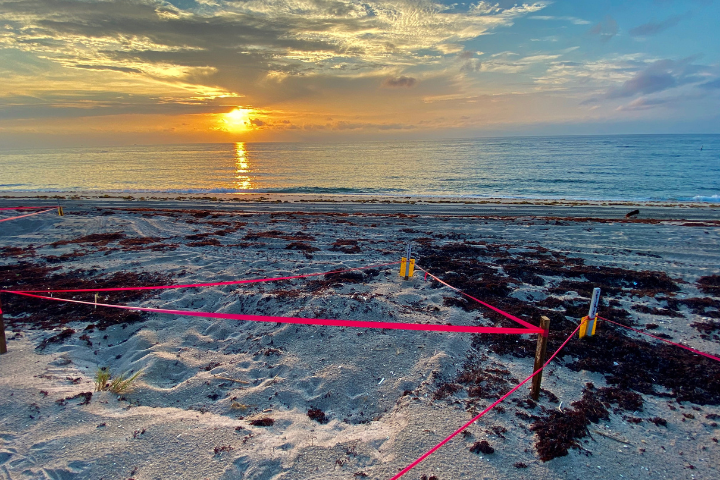
Each morning during nesting season, Gulf Coast Turtle Watch, Inc. and other permitted volunteers survey Perdido Key’s beaches on foot and ATV. These trained monitors look for new crawl tracks, identify fresh nests, and carefully mark and protect them with signage and stakes.
They also document nesting data that contributes to broader conservation research across the Gulf Coast. Their efforts are instrumental in helping hatchlings reach the sea—and increasing their odds of survival in the wild.

The Gift of Respectful Observation

Seeing a sea turtle nest is an unforgettable experience, but it’s one that must be approached with care. When we respect the space these animals need, we help ensure that future generations can enjoy the same wonder.
"The best turtle sighting is the one where the turtle never knew you were there."
Next in the Series: Post 3 – “Tiny Tracks – Hatching Season on Perdido Key”
We’ll explore what happens after nesting, how hatchlings make their journey to the Gulf, and the best ways to witness it safely and responsibly. Be sure to follow our blog and social channels so you don’t miss it!